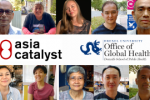
For the next two weeks, Meg and Gisa will be “vlogging” (video blogging) our trip to Beijing and Yunnan to do on-the-ground work for Asia Catalyst: lobbying officials, coaching NGO partners, and holding a party to celebrate the accomplishments of our first “incubation” project, the Korekata AIDS Law Center.
[REPORT] Abuses Against Drug Users in Indonesia
by Sara (Meg) Davis, Agus Triwahyuono, and Risa Alexander
from Harm Reduction Journal
In Indonesia, an ongoing government “war on drugs” has resulted in
numerous arrests and anecdotal reports of abuse in detention, but to
date there has been little documentation or analysis of this issue.
JANGKAR (also known in English as the Indonesian Harm Reduction
Network), a nongovernmental organization (NGO) based in Jakarta,
surveyed 1106 injecting drug users in 13 cities about their experiences
of police abuse. Of those interviewed, 667 or 60% reported physical
abuse by police. These findings indicate the importance of continuing
efforts to promote police reform and harm reduction in Indonesia.
We’re delighted that our article on Jangkar’s groundbreaking research has been published in a peer-reviewed journal. For the full article and excerpts from the moving testimony of drug users in Indonesia, please see the Harm Reduction Journal.

[REPORT] “We Go to the Doctor When We Have Money. When We Don’t We Just Pray.”
Ami Evangelista Swanepoel recently moved from the U.S. to her home in the Philippines to start a new health rights NGO, Roots of Health. This week, she shares the disturbing results of their second-ever community health survey.
[NEWS] China: Suspend Disastrous Burma Pipeline
Asia Catalyst was proud to sign onto this letter, organized by Burmese NGOs, calling on China to suspend its plans to build oil and gas pipelines in ethnic regions of Burma. Already, the pipeline has caused dislocation, abuses and instability in the region. The press release follows, and more information is available at www.shwe.org.
[REPORT] Nepal: Ensure rights for all castes
By the Center for Human Rights and Global Justice at New York University School of Law, the Dalit NGO Federation (Nepal), and the International Dalit Solidarity Network. Republished courtesy Smita Narula, NYU.
In creating the new constitution for Nepal, the Constituent Assembly
has the opportunity to crystallize the country’s peace, advance Nepal’s
political, economic and social development, and demonstrate a
commitment to the inherent dignity of all individuals. In order to
fulfill these paramount goals, the rights of all of Nepal’s Dalit
population – especially women and “lower” Dalit castes – must finally
be realized.